When people compare Cab Franc vs Cabernet Sauvignon, they often assume the differences are subtle. They’re not.
These two grapes are closely related—Cabernet Franc is one of the parents of Cabernet Sauvignon—and they’re often blended together. But side by side, they tell very different stories. Structure, aromatics, texture, even how they age—it all shifts.
At Majuscule, we work with both from high-elevation vineyards on Mount Veeder, where site has a way of sharpening those differences. Cabernet Sauvignon leans into depth and structure. Cabernet Franc brings lift, nuance, and a different kind of precision.
So while the names may sound familiar, the tasting experience isn’t the same.
Two Grapes, Same Family – Different Personalities
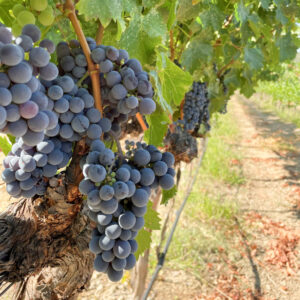
Cabernet Sauvignon, of course, is the more widely known of the two. It’s planted across the world and defines what many people expect from Napa Valley red wine.
But familiarity doesn’t mean similarity.
Where Cabernet Sauvignon tends to lead with structure and power, Cabernet Franc is more about lift, nuance, and aromatic detail. One leans into depth and density. The other brings energy and precision.
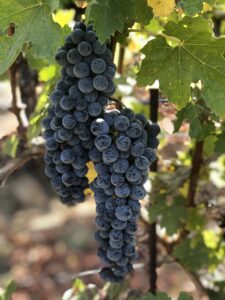
How They Actually Taste in the Glass
Cabernet Sauvignon is typically fuller-bodied, with firm tannins and a layered profile of dark fruit—blackberry, cassis—often framed by oak, spice, and a long, structured finish. It’s built to age and evolves over time.
Cabernet Franc moves in a different direction. The body is lighter, the tannins softer, and the acidity more pronounced. Red fruit takes the lead—think raspberry and cherry—alongside herbal notes, floral lift, and a subtle peppery edge. It’s more open, more aromatic, and often more immediately expressive.
Neither is better. They simply offer different experiences.
What Does Cabernet Franc Taste Like?
At its best, Cabernet Franc is defined by balance and brightness.
You’ll notice red fruit first, followed by layers of herbs, earth, and a hint of spice. There’s a freshness to it—driven by acidity—that makes it especially versatile at the table. It’s structured enough to hold its own, but never heavy.
That combination of lift and restraint is part of what makes it so compelling, especially from higher-elevation sites like Mount Veeder.
Cabernet Franc vs Cabernet Sauvignon
If Cabernet Sauvignon is about structure and longevity, Cabernet Franc is about energy and detail.
Cabernet Sauvignon builds from the ground up—dense, powerful, and age-worthy. Cabernet Franc moves differently—more aromatic, more agile, and often more approachable earlier on.
They share a lineage, but they don’t compete. They complement.
Taste the Difference
In the end, there isn’t a clear winner between Cabernet Franc and Cabernet Sauvignon. Each stands on its own, shaped by site, climate, and the intent behind the wine.
The real difference shows up in the glass.
At Majuscule, we produce both wines from high-elevation vineyards on Mount Veeder, where cooler temperatures and volcanic soils bring structure, freshness, and clarity to the wines. Side by side, the contrast is unmistakable.
Related Reading:
– Cab Franc for Spring Wine Drinking